
University of Lausanne
Institute of geography and sustainability
Mouline - Géopolis 3552
CH-1015 Lausanne
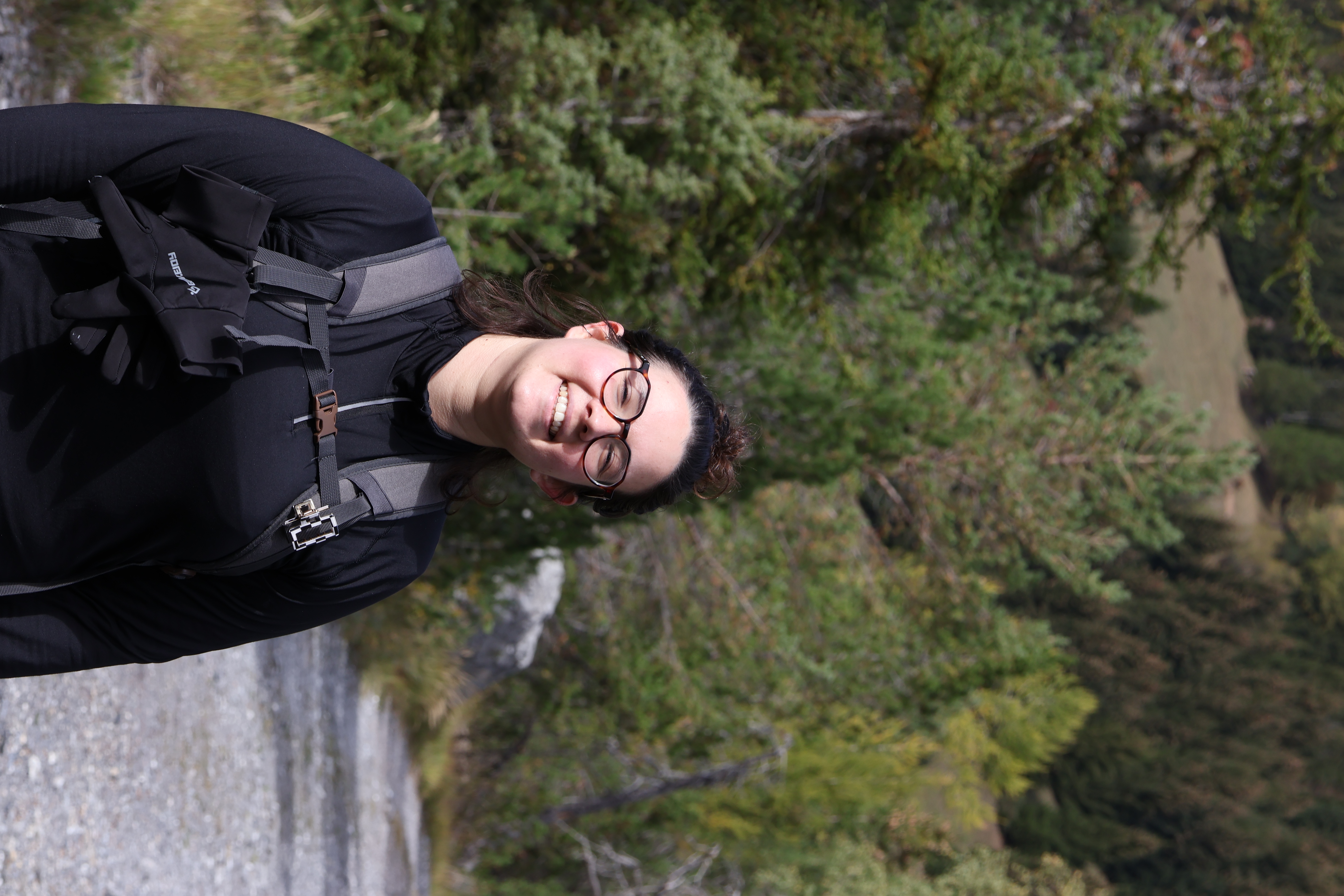
Júlia Souza Pinto Camanho
Júlia Souza Pinto Camanho is a Brazilian PhD candidate in Nutrition in Public Health at the School of Public Health of the University of São Paulo (FSP/USP), supervised by Prof. José Miguel Nieto Olivar and co-supervised by Prof. Aline Rissatto Teixeira, in a Direct PhD programme funded by the São Paulo Research Foundation (FAPESP).
She is currently a visiting researcher at the Institute of Geography and Sustainability (IGD) of the University of Lausanne, under the supervision of First Assistant Marianna Fenzi and the co-supervision of Prof. Valérie Boisvert, and is part of the Political Ecology research group. She holds a degree in Nutrition from the University of São Paulo, where she is now pursuing her doctoral research, and a degree in Gastronomy (Centro Universitário Senac, Santo Amaro).
Her ethnographic research is carried out with the Tuyuka and Tukano Indigenous peoples of the Upper Rio Negro, in São Gabriel da Cachoeira (Amazonas, Brazil), and approaches the Traditional Agricultural System of the Rio Negro as a cosmopolitical device of care, resistance and territorial management. She focuses in particular on the leading role of Tuyuka women in agricultural practices, in the conservation of Amazonian agro-socio-biodiversity, and in the political organisation of the Rio Negro Indigenous movement, notably through the Indigenous Association of the Tuyuka People Living in São Gabriel da Cachoeira (AIETUM-SGC).
This work is part of the project "Cosmopolitics of Care at the End of the World: Gender, Borders and Pluriepistemological Assemblages with Public Health" (Cosmopolíticas do Cuidado no fim-do-mundo), within which she coordinates the sub-project "Quinhapira, arepa & taioba: Land, Food and the Women of the End-of-the-World".
Bringing together decolonial perspectives, cosmopolitics of care and pluriepistemological knowledges in Nutrition and Public Health, she critically examines the tensions between universalist public policies (Brazil's school feeding and food procurement programmes, PNAE and PAA) and Indigenous cosmologies. Her work engages with debates on food and nutrition (in)security, food sovereignty, dietary transition, Indigenous urbanisation, climate change, and the impacts of the Anthropocene/Capitalocene on traditional territories and ways of life.
She is a member of the Research Collective in Anthropology, Art and Public Health (CPaS-1) and of the Laboratory of Scientific-Political Hybridisation in Public Health (LaHibrid), both affiliated with FSP/USP.
Her detailed curriculum vitae is available on the Lattes Platform (CNPq, Brazil), and a short version of her CV can be downloaded here
